
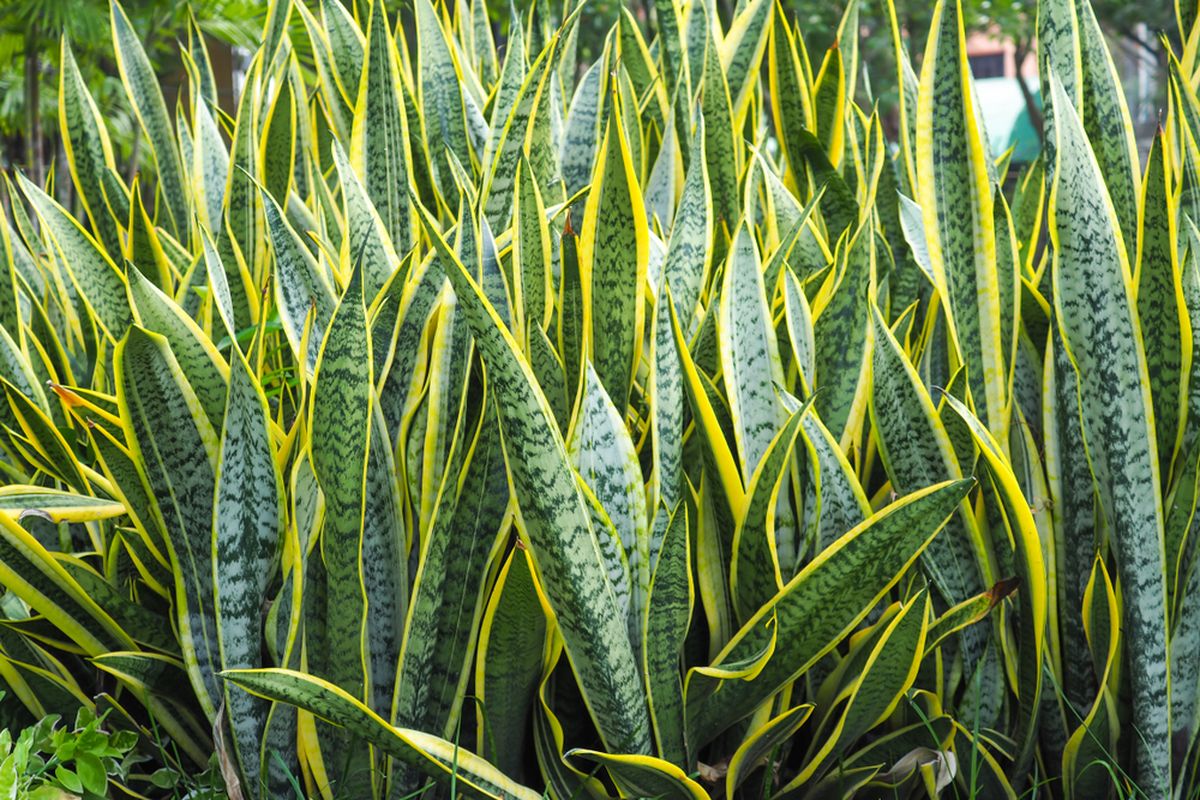
Snake Plant
Sansevieria trifasciata
Kingdom
Plantae
Division
Magnoliophyta
Class
Angiosperms
Order
Asparagales
Family
Asparagaceae
Genus
Sansevieria
Plant Description
Sansevieria (commonly known as the Snake Plant) is a popular ornamental plant featuring stiff, upright leaves with grey-green marbled patterns that provide a modern aesthetic. Its architectural form makes it a perfect fit for minimalist gardens as well as indoor decor. This plant is highly drought-tolerant, survives in low light, and requires infrequent watering, making it ideal for beginners who want to add a touch of greenery without the hassle of complex maintenance.
Benefits:
- Air Purification: Helps improve indoor air quality by absorbing certain pollutants.
- Modern Decorative Element: Perfect as a contemporary decorative feature due to its bold and tidy silhouette.
- High Resilience: Extremely easy to care for and withstands harsh conditions, making it suitable for homes, offices, and urban landscapes alike.
Estimated Carbon Absorption
Data based on number of plants
Total Carbon (kg/tree)
0
Total Carbon (ton/ha)
0
Total CO₂ Absorbed
0 ton
What is Carbon Estimation and Why is it Important?
Carbon stock is the amount of carbon stored in an area, mainly in plants, soil, and other green elements. In the context of parks, carbon stock shows how much a park contributes to 'absorbing' carbon dioxide (CO₂) from the air through natural plant processes like photosynthesis. The absorbed carbon is then stored in stems, leaves, roots, and soil around it.
Carbon estimation refers to the estimated amount of carbon absorbed and stored by vegetation in a park. This calculation usually uses scientific methods based on plant species, tree size, area, and vegetation density. In other words, carbon estimation helps us understand a park's contribution to reducing air pollution and climate change impact.
Term Explanation
- CO₂ Absorbed : Estimated amount of carbon dioxide absorbed by the plant.