
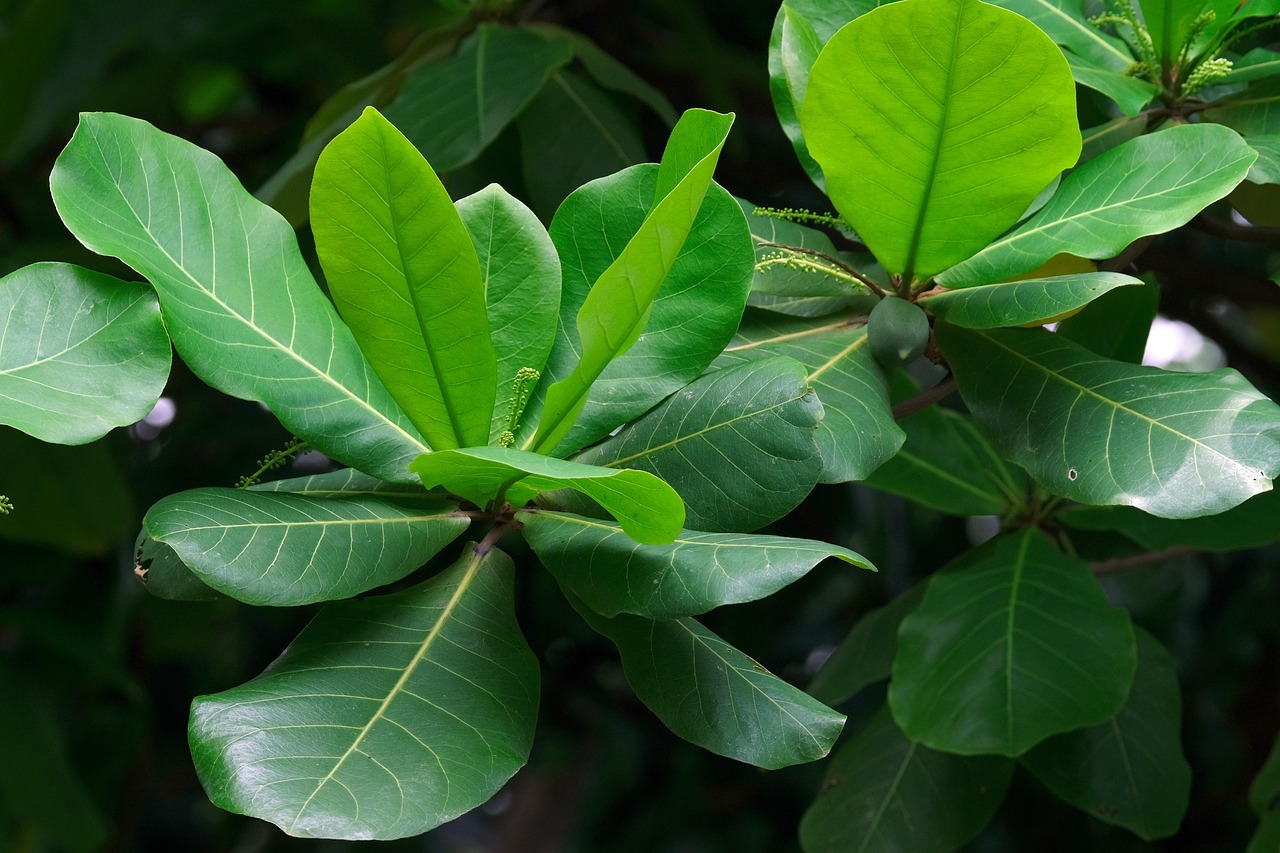
Sea Almond
Terminalia catappa
Kingdom
Plantae
Division
Pteridobiotina
Class
Magnoliopsida
Order
Myrtales
Family
Combretaceae
Genus
Terminalia
Plant Description
The Sea Almond (Terminalia catappa) is a large shade tree with a broad, tiered canopy that provides extensive and cool shade. Its large leaves turn a beautiful reddish-brown before falling, creating a stunning seasonal display in tropical regions. Resilient to heat, wind, and coastal conditions, the Sea Almond is well-suited for large gardens, roadsides, or beach areas to bring a natural shaded atmosphere.
Benefits:
- Natural Cooling: Provides ample shade and effectively lowers the surrounding ambient temperature.
- Traditional & Aquascaping Use: Its leaves are frequently used in traditional practices, including for the care and treatment of ornamental fish.
- Resilient in Extreme Environments: Highly durable against harsh conditions, making it ideal for greening open spaces and coastal areas.
Estimated Carbon Absorption
Data based on number of plants
Total Carbon (kg/tree)
2910,534
Total Carbon (ton/ha)
0,005
Total CO₂ Absorbed
0,018 ton
What is Carbon Estimation and Why is it Important?
Carbon stock is the amount of carbon stored in an area, mainly in plants, soil, and other green elements. In the context of parks, carbon stock shows how much a park contributes to 'absorbing' carbon dioxide (CO₂) from the air through natural plant processes like photosynthesis. The absorbed carbon is then stored in stems, leaves, roots, and soil around it.
Carbon estimation refers to the estimated amount of carbon absorbed and stored by vegetation in a park. This calculation usually uses scientific methods based on plant species, tree size, area, and vegetation density. In other words, carbon estimation helps us understand a park's contribution to reducing air pollution and climate change impact.
Term Explanation
- CO₂ Absorbed : Estimated amount of carbon dioxide absorbed by the plant.